Research Tip Sheet: Liver Cancer Trends + AI In Science, Testing
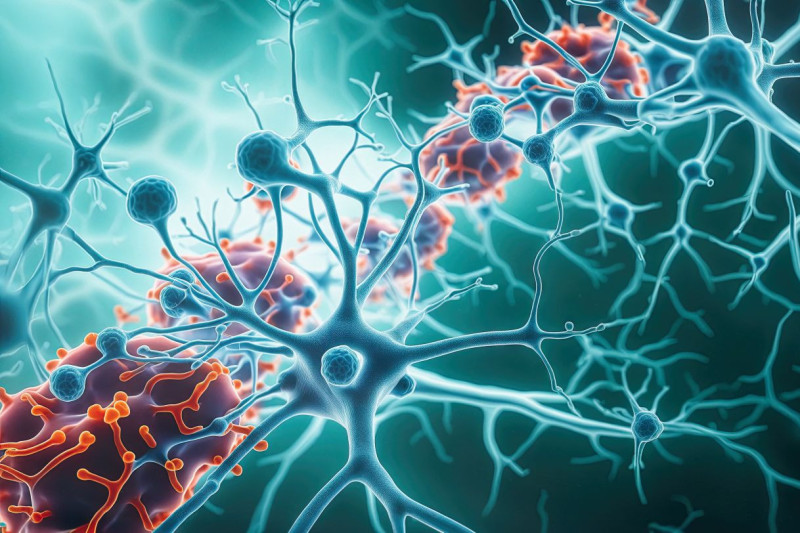
AI Framework Speeds Up Brain Neuron Modeling
Newswise — Cedars-Sinai investigators worked with a multi-institutional team to develop a new artificial intelligence framework that can accurately, quickly and efficiently create virtual models of brain neurons. The achievement could accelerate discoveries in brain function research and ultimately lead to better treatments for brain disorders.
The study’s findings were presented at the 39th Conference on Neural Information Processing Systems in San Diego.
“Computational modeling of brain neurons has become an important tool for studying their activity and interactions,” said co-author Costas Anastassiou, PhD, associate professor of Neurology, Neurosurgery and Biomedical Sciences at Cedars-Sinai. “But traditional models are hindered by limitations including the cost of computer resources, data availability and cumbersome handling. Our new framework tackles this problem by operating at speeds thousands of times faster than existing methods while remaining so biologically accurate that it can capture the variability of actual brain neurons, unlike current approaches. The framework can also generate an unlimited number of virtual neurons, better reflecting the diversity and variability of actual biological neurons.”
Anastassiou added that the framework opens a pathway toward modeling larger-scale brain circuits that could improve understanding of the relationships between gene expression, electrical activity and networking in neurons. The investigators named their invention NOBLE, for Neural Operator with Biologically-informed Latent Embeddings.
“I am very happy to see this interdisciplinary and inter-institutional collaboration,” said Anima Anandkumar, PhD, Bren Professor of Computing and Mathematical Sciences at Caltech and a co-author of the study. “Neural operators are designed to capture the complex dynamics seen in biological neurons, and this is the first large-scale AI framework validated with experimental human cortex data.”
The additional Cedars-Sinai author is Philip H. Wong.
Other authors include Luca Ghafourpour, Valentin Duruisseaux, and Bahareh Tolooshams.
Funding: A.A. is supported by the Bren Endowed Chair, ONR (MURI grant N00014-23-1-2654), and the AI2050 Senior Fellow program at Schmidt Sciences. C.A.A. is supported by the National Institutes of Health R01 – NS120300 and R01 – NS130126. P.H.W. is supported by the National Institutes of Health R01 – NS130126.
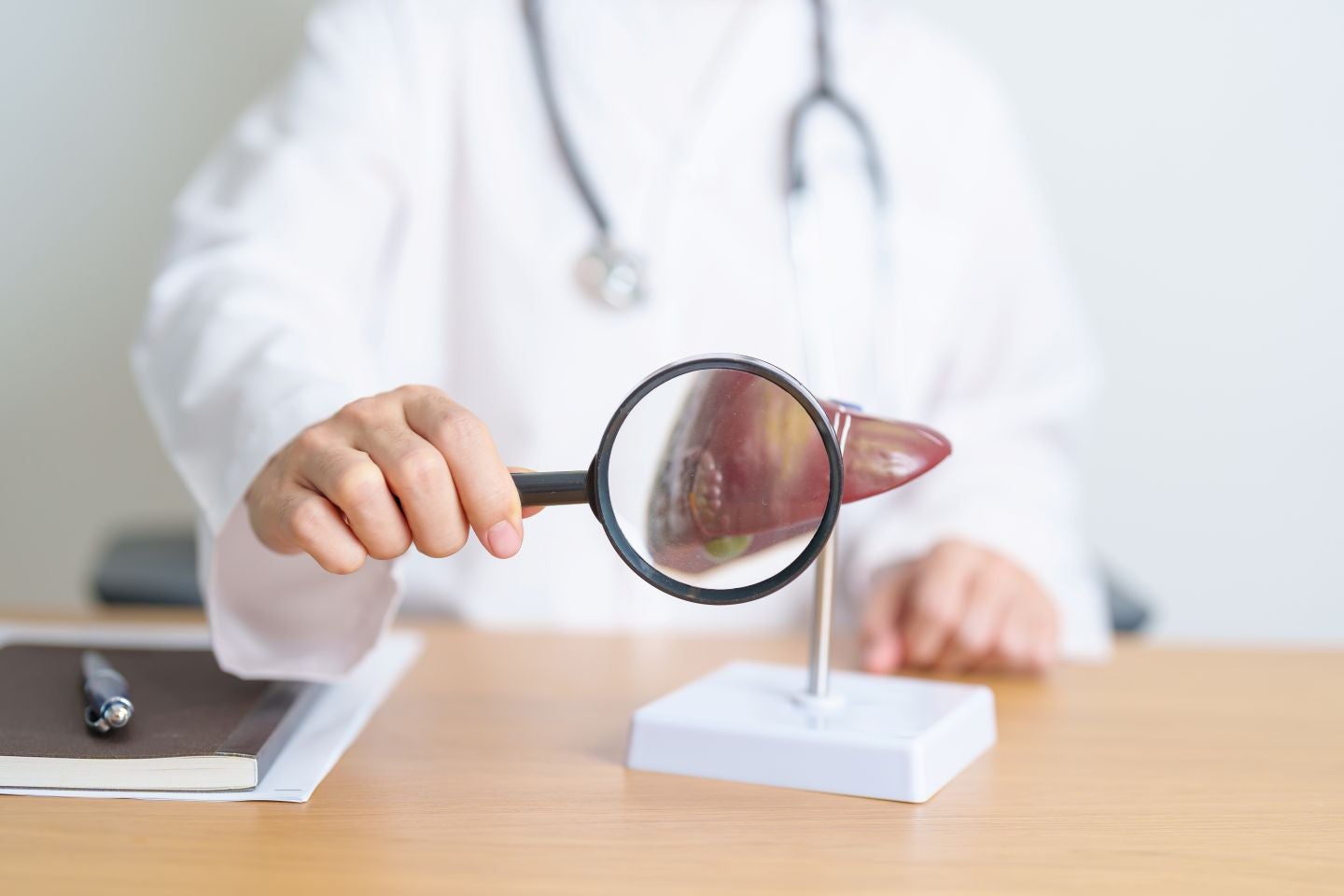
Liver Cancer Prevention, Treatment Efforts Are Working
Prevention and treatment advances are reducing the number of new liver cancer patients and narrowing survival gaps among racial groups, a Cedars-Sinai Cancer study published in the journal Clinical Gastroenterology and Hepatology reports.
“We found that liver cancer rates in the U.S. have begun to decline after many years of increase, and deaths from liver cancer have stabilized,” said Ju Dong Yang, MD, medical director of the Liver Cancer Program at Cedars-Sinai and senior author of the study. “Younger patients and those with advanced disease are living longer, partly due to new therapies. And differences in survival rates between Black and white patients have nearly disappeared, suggesting that fairer access to care and treatment advances are helping reduce longstanding racial disparities.”
Investigators looked at data from the National Cancer Institute’s Surveillance, Epidemiology, and End Results cancer registry on newly diagnosed liver cancer cases, tumor stage at diagnosis, treatment trends, and survival rates in the U.S. over the past two decades. Despite declining liver cancer rates and improved overall survival, they found that early detection and curative treatment decreased during the COVID-19 pandemic. Investigators suggest this highlights the importance of strengthening screening and care access during healthcare disruptions.
Additional Cedars-Sinai authors include Yi-Te Lee, Hyun-seok Kim, Alexander Kuo, Walid S. Ayoub, Hirsh D. Trivedi, Yun Wang, Aarshi Vipani, Paul Martin, and Cristina R. Ferrone.
Other authors include Jasmine J. Wang, Pojsakorn Danpanichkul, and Amit G. Singal.
Funding: Dr. Singal’s research is funded by National Institutes of Health R01CA256977 and R01 MD012565. Dr. Yang’s research is supported by National Institutes of Health K08CA259534; R21CA280444.
Disclosures: Dr. Yang provides a consulting service for AstraZeneca, Eisai, Exact Sciences, Exelixis, Fujifilm Medical Sciences, Merck, and Gilead Sciences.
New AI Tool Improves Heart Test Evaluation
A new AI tool can rapidly evaluate data from echocardiography, an imaging test commonly used to diagnose heart disease, according to new research led by Cedars-Sinai. The study, published in JACC, found the tool could speed up the testing process and yield more uniform results.
The AI system automatically takes 18 different measurements during echocardiography, which uses high-frequency sound waves to create moving pictures of the heart and evaluate blood flow. The procedure is used to assess signs and symptoms of heart failure, atherosclerosis, cardiomyopathy and other conditions.
“Our AI tool demonstrated accuracy and precision comparable to that of expert sonographers from two medical institutions,” said David Ouyang, MD, assistant professor in the Department of Cardiology in the Smidt Heart Institute at Cedars-Sinai and corresponding author of the study. “One of the primary benefits of automation is that it reduces examination time and produces more consistent readings.”
Ouyang added that more testing is needed before the tool is used for patients.
Additional Cedars-Sinai authors include Yuki Sahashi, Victoria Yuan, Matthew Christensen, Milos Vukadinovic and Christina Binder-Rodriguez.
Additional authors include Hirotaka Ieki, Justin Rhee, James Y. Zou, Bryan He and Paul Cheng.
Funding: This work was funded by National Institutes of Health, National Heart, Lung, and Blood Institute grants R00HL157421, R01HL173526, and R01HL173487.
Cedars-Sinai Health Sciences University is advancing groundbreaking research and educating future leaders in medicine, biomedical sciences and allied health sciences. Learn more about the university.
link