


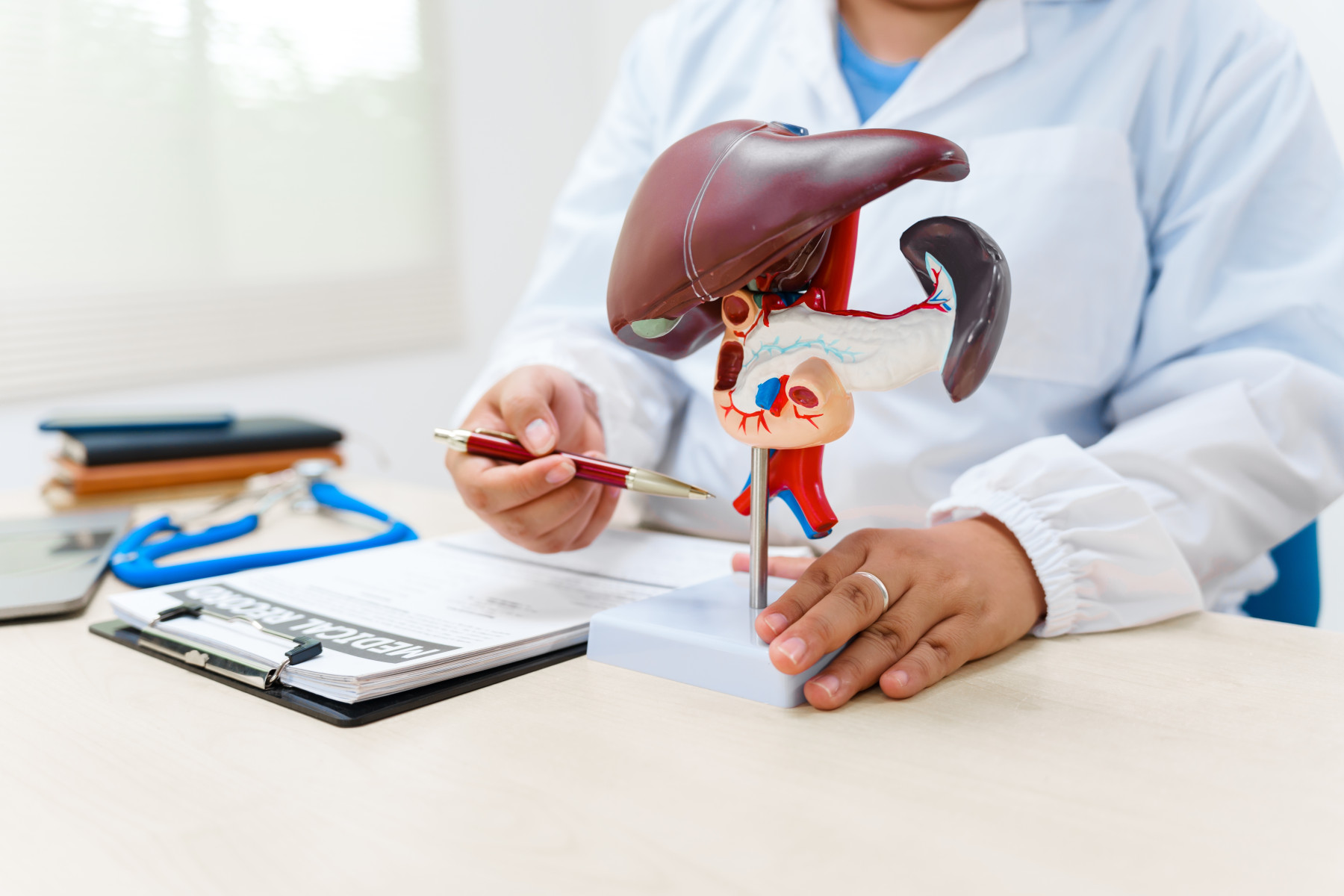

Liver model
Though not one of the most common cancers, Marcie Lindstrom, APRN, says she’s seen liver cancer cases rise in recent years in line with national trends. Luckily, the gastroenterology provider at OSF HealthCare says treatment has evolved, too. And it’s another reminder to know your body and see your health care provider regularly because liver cancer is more treatable when caught early.
The liver: A recap
A primer on what the liver does for us: Lindstrom says the liver sits underneath the right ribcage and cleans toxins from our blood, helps digestion and produces proteins needed to live. In other words, it’s not an organ you can live without like a gallbladder or one kidney.
Liver cancer: Hidden and harmful
Lindstrom says primary liver cancer describes when the cancer starts there, and secondary liver cancer is when it spreads there (medical term: metastasizes), most commonly from the lungs, breasts or colon. Secondary is more common than primary.
“There are multiple causes of liver cancer. A person is at a higher risk if they have a damaged liver,” Lindstrom says. “Things that can cause a damaged liver include alcohol. So heavy alcohol use [is a risk]. Viruses that can infect the liver such as hepatitis B and C [are risks]. And we’re seeing an increasing number of people having fatty liver disease. That puts people at risk for liver damage. That damage can progress to cirrhosis [scarring], and cirrhosis puts you at a higher risk.”
These liver issues can be fatal if untreated. And unfortunately, Lindstrom says liver cancer often comes with no symptoms.
Diagnosis and treatment
That’s where regular visits to your primary care provider, and if needed, a specialist like a gastroenterologist or oncologist come in.
Lindstrom says your provider will go over your risk factors: do you have a family history of liver issues? What’s your own health history, specifically with hepatitis? How often do you drink alcohol? What’s your daily diet and exercise routine?
“If we determine somebody has a lot of scarring of the liver, they should be on regular surveillance looking for liver cancer,” Lindstrom urges. “Every six months, they should get some imaging and possibly a blood test that helps to detect cancer.” The person could also have a biopsy of their liver, where a provider will take a sample of liver tissue and send it to a laboratory to find out exactly what’s wrong.
Chemotherapy, radiation therapy, immunotherapy and liver transplant surgery are possible treatments.
“A liver transplant could be required if the tumor isn’t very large, but there’s a lot of damage or scarring of the liver,” Lindstrom explains.
Prevention
Lindstrom says if it’s caught early, liver cancer can be treated and even cured. Some things to keep in mind to avoid the disease:
- Eat a healthy diet, avoiding things like processed food, high sugar food and high fat food that can lead to liver issues.
- Get moving to avoid things like obesity, diabetes and high cholesterol. The American Heart Association says to aim for 150 minutes of exercise per week spread out over several days.
- If you do develop chronic conditions like diabetes, see your provider regularly to stay on top of managing the issue.
- Know your family history of liver and other health issues.
- Limit alcohol or avoid it altogether.
- There’s no vaccine for hepatitis C, but there is treatment. There is a vaccine for hepatitis B. The United States Centers for Disease Control and Prevention says the shots are safe, effective and have a schedule. Talk to a provider to see if you’re on schedule or if you need a shot now, for example if you’re at high risk.
- Take other steps to avoid hepatitis: practice safe sexual relations, avoid blood-to-blood contact with others and don’t share or reuse needles.
“You have a history of blood transfusions prior to 1992. You got a tattoo or piercing in a less than sanitary situation,” Lindstrom lists as other hepatitis risk factors. “I’d recommend getting screened. In fact, it’s a current recommendation to be screened for hepatitis C at least once in adulthood.”
Lindstrom says providers list 1992 as a hepatitis C benchmark because that’s when blood screenings were developed.
Learn more
Read more about how to keep your digestive system healthy on the OSF HealthCare website. Cancer care at OSF HealthCare also includes the OSF HealthCare Cancer Institute in Peoria, Illinois, which provides comprehensive care for the region.
link